
Ornamental at London's Glitch
Ornamental tattooing uses pattern, rhythm, repetition and composition to create designs that work with the shape of the body. It can be symmetrical or free-flowing, minimal or highly detailed, structured or organic.
At London's Glitch, our ornamental tattoo artists approach the discipline in very different ways, combining influences from fine line, blackwork, dotwork, geometry, botanical forms, abstract composition and contemporary decorative tattooing.
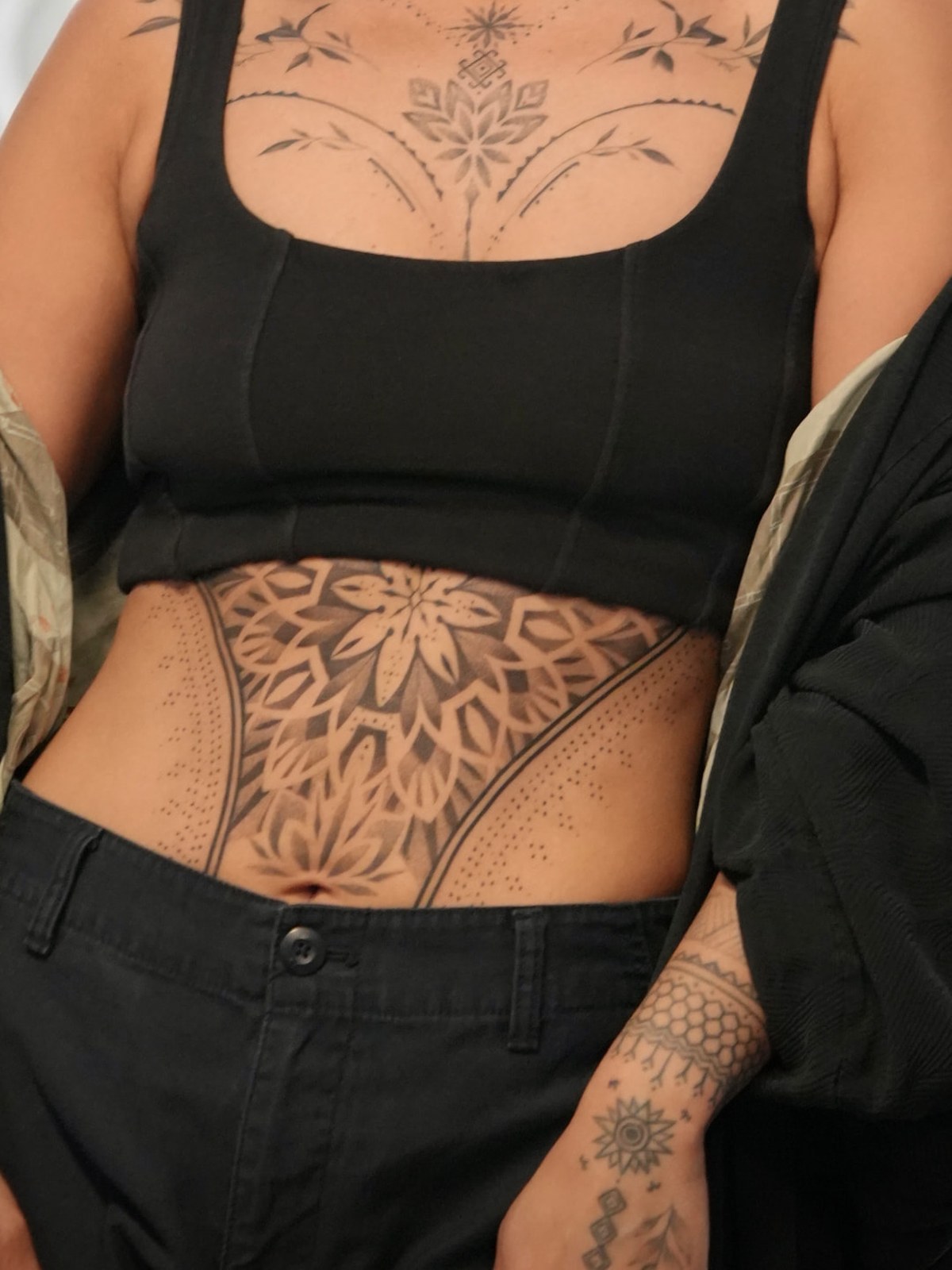
Ornamental tattooing is built around composition. Rather than focusing only on a single subject, the design often uses repeated shapes, lines, curves, patterns and negative space to create structure and movement across the body.
There is no single ornamental aesthetic. Some pieces are highly symmetrical and precise, while others are organic, asymmetrical or designed freehand to follow the natural movement of the body.
Ornamental work can incorporate structured pattern, fine line details, dotwork, botanical forms, blackwork, abstract elements and decorative motifs. These influences can be combined differently depending on the artist, placement and overall concept.
The relationship between the tattoo and the body is especially important. Ornamental designs can frame joints, follow muscle groups, wrap around limbs, extend across the chest or back, or connect separate areas into one continuous composition.
Scale can vary enormously. A small ornamental detail may work as a standalone piece, while larger projects can develop into sleeves, chest pieces, back pieces or full-body compositions built gradually across several sessions.
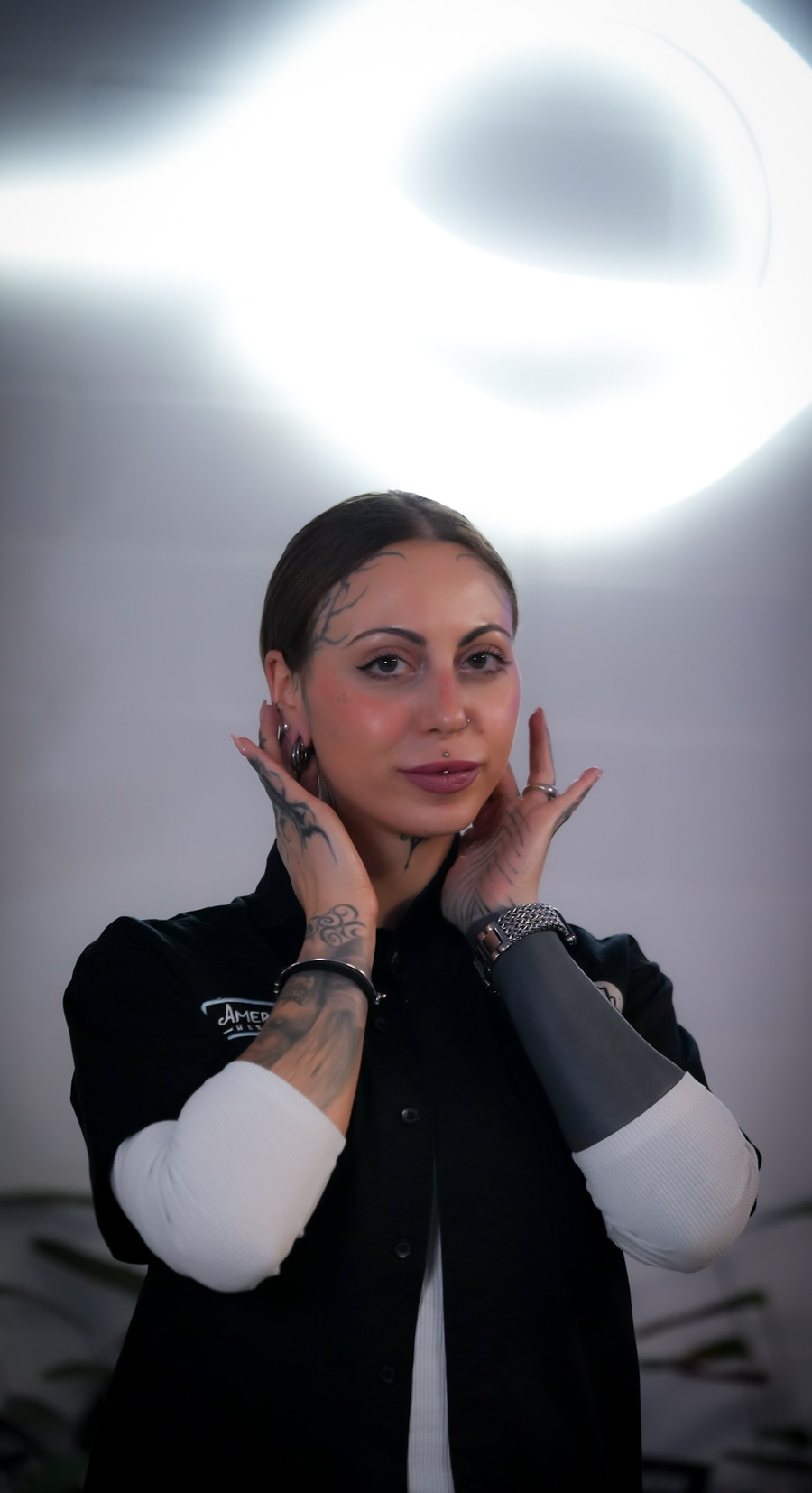
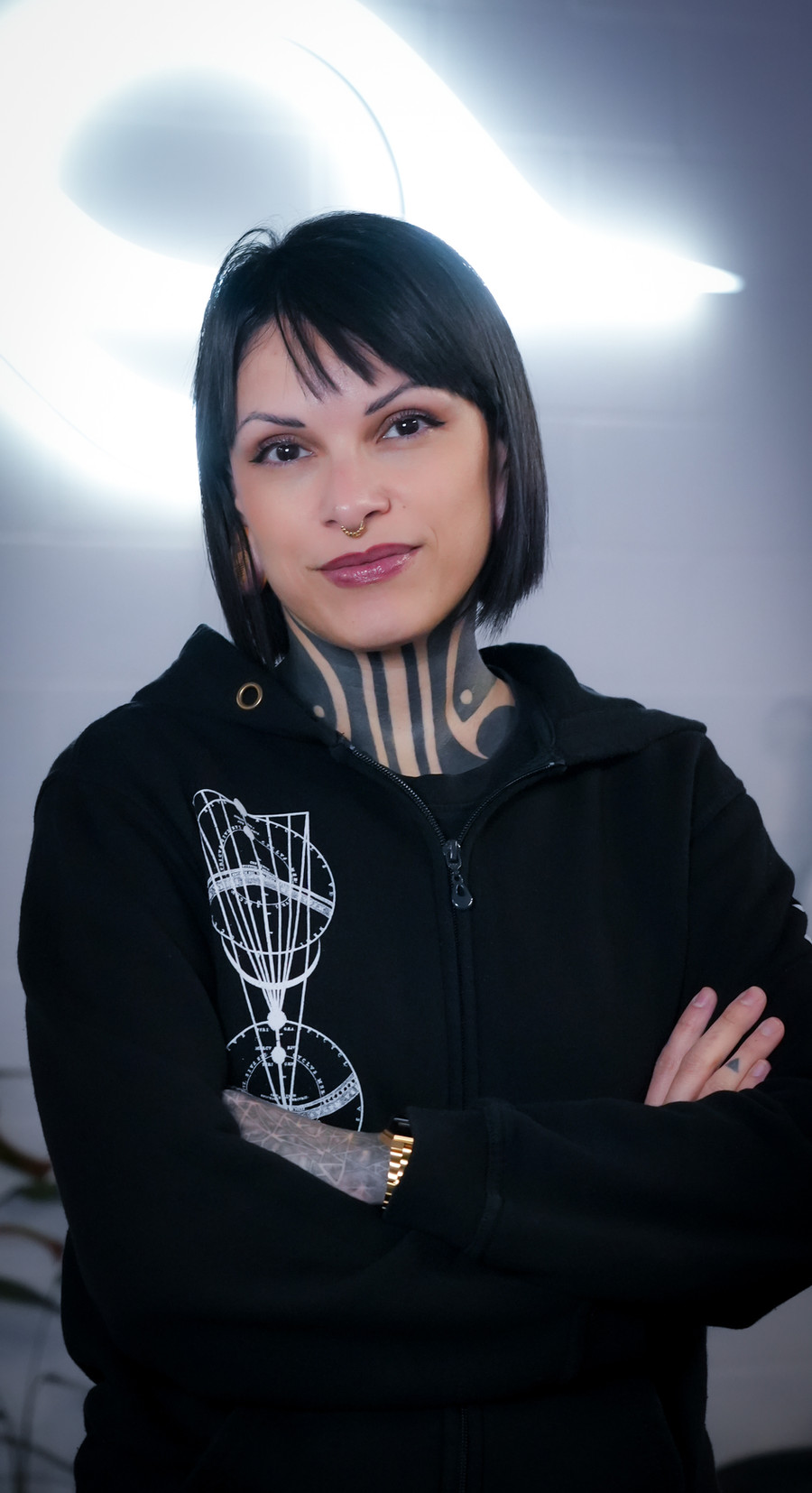
At London's Glitch, our ornamental artists each have their own visual language. Some work with precision and symmetry, others favour flowing abstract structures, botanical influences, darker blackwork or more experimental compositions.
For larger projects, the design process may involve careful planning, body mapping and adjustments directly on the client to make sure the final tattoo works with the anatomy rather than simply sitting on top of it.
If your idea combines ornamental tattooing with another discipline, that is completely fine. We can help match you with the London's Glitch artist, or combination of artists, whose approach best suits the project.
Ornamental Artists at London's Glitch





Have an ornamental idea but not sure how to develop it?
Tell us about the placement, scale and visual direction you have in mind. We'll help you find the artist and approach best suited to the project.